- Scientists have been trying to
understand the origin of COVID-19 and the virus that causes it:
SARS-CoV-2.
- Originally, scientists believed the virus may have developed in bats, and later pangolins.
- However, genomic comparisons suggest
that the SARS-Cov-2 virus is the result of a recombination between two
different viruses, meaning the exact origin of the virus is still unclear.
In the space of a few
weeks, we have all learned a lot about COVID-19 and the virus that causes it:
SARS-CoV-2. But there have also been a lot of rumors. And while the number of
scientific articles on this virus is increasing, there are still many grey
areas as to its origins.
In which animal species
did it occur? A bat, a pangolin or another wild species? Where does it come
from? From a cave or a forest in the Chinese province of Hubei, or elsewhere?
In December 2019, 27 of
the first 41 people hospitalized (66%) passed through a market located in the
heart of Wuhan city in Hubei province. But, according to a study conducted
at Wuhan Hospital, the very first human case identified did not frequent this
market. Instead, a molecular dating estimate based on the SARS-CoV-2
genomic sequences indicates an origin in November. This raises questions
about the link between this COVID-19 epidemic and wildlife.
Genomic data
The SARS-CoV-2
genome was rapidly sequenced by Chinese researchers. It is an RNA
molecule of about 30,000 bases containing 15 genes, including the S gene which
codes for a protein located on the surface of the viral envelope (for
comparison, our genome is in the form of a double helix of DNA about 3 billion
bases in size and contains about 30,000 genes).
Comparative genomic
analyses have shown that SARS-CoV-2 belongs to the group of
Betacoronaviruses and that it is very close to SARS-CoV, responsible for
an epidemic of acute pneumonia which appeared in November 2002 in the Chinese
province of Guangdong and then spread to 29 countries in 2003. A total of 8,098
cases were recorded, including 774 deaths. It is known that bats of the genus
Rhinolophus (potentially several cave species) were the reservoir of this
virus and that a small carnivore, the palm civet (Paguma larvata), may
have served as an intermediate host between bats and the first human
cases.
Since then, many
Betacoronaviruses have been discovered, mainly in bats, but also in humans. For
example, RaTG13, isolated from a bat of the species Rhinolophus affinis
collected in China’s Yunan Province, has recently been described as very
similar to SARS-CoV-2, with genome sequences identical to 96%. These
results indicate that bats, and in particular species of the genus Rhinolophus,
constitute the reservoir of the SARS-CoV and SARS-CoV-2 viruses.
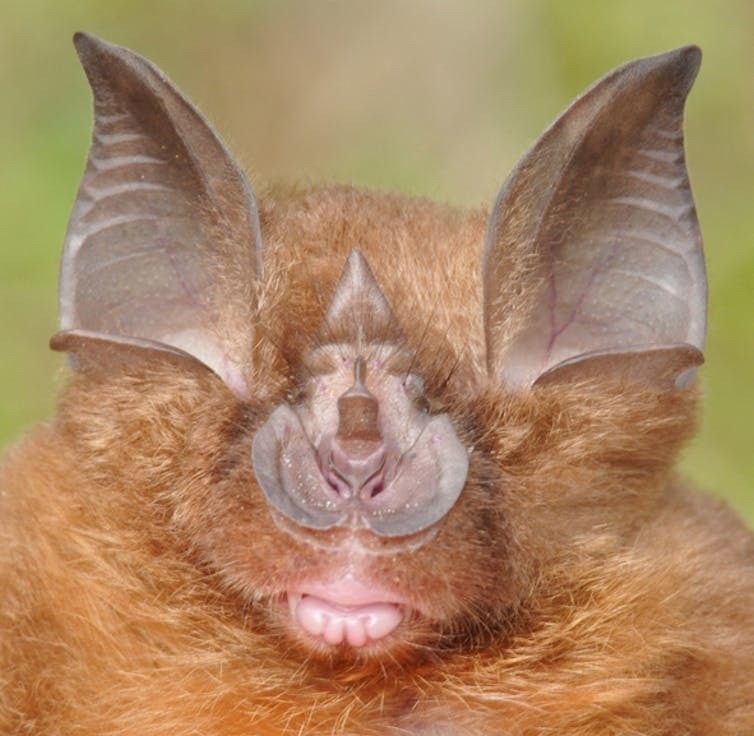 |
| AddBats (Rhinolophus affinis) were originally thought to be the source of virus. Image: Alexandre Hassanin |
But how do you define a
reservoir? A reservoir is one or several animal species that are not or not
very sensitive to the virus, which will naturally host one or several viruses.
The absence of symptoms of the disease is explained by the effectiveness of
their immune system, which allows them to fight against too much viral proliferation.
Recombination mechanism
On February 7, 2020, we
learned that a virus even closer to SARS-CoV-2 had been discovered in pangolin.
With 99% of genomic concordance reported, this suggested a more likely
reservoir than bats. However, a recent study under review shows that
the genome of the coronavirus isolated from the Malaysian pangolin (Manis
javanica) is less similar to SARS-Cov-2, with only 90% of genomic concordance.
This would indicate that the virus isolated in the pangolin is not responsible
for the COVID-19 epidemic currently raging.
However, the coronavirus
isolated from pangolin is similar at 99% in a specific region of the S protein,
which corresponds to the 74 amino acids involved in the ACE (Angiotensin
Converting Enzyme 2) receptor binding domain, the one that allows the virus to
enter human cells to infect them. By contrast, the virus RaTG13 isolated from
bat R. affinis is highly divergent in this specific region (only 77 % of
similarity). This means that the coronavirus isolated from pangolin is capable
of entering human cells whereas the one isolated from bat R. affinis is not.
In addition, these
genomic comparisons suggest that the SARS-Cov-2 virus is the result of a
recombination between two different viruses, one close to RaTG13 and the other
closer to the pangolin virus. In other words, it is a chimera between two
pre-existing viruses.
This recombination
mechanism had already been described in coronaviruses, in particular
to explain the origin of SARS-CoV. It is important to know that recombination
results in a new virus potentially capable of infecting a new host species. For
recombination to occur, the two divergent viruses must have infected the same
organism simultaneously.
Two questions remain
unanswered: in which organism did this recombination occur? (a bat, a pangolin
or another species?) And above all, under what conditions did this
recombination take place?